
- Someone else will help. How can I help, really? I’m in bad shape myself, financially, emotionally, mentally.
- I offered up my help and told them to let me know how I can help. They will tell me if they need anything.
- I had no idea you needed anything. Why didn’t you ask?!?
These thoughts went through my mind constantly when I was faced with family, friends, and strangers who were clearly in need.
Slowly and stubbornly, I was changed by a few circumstances of my own. I cannot think of a specific time when I started thinking differently, but I find beauty in that. The fact that God was literally working through multiple circumstances of my own to change me from losing love, having to quit a sport I loved and identified with, leaving a job that I felt called to, being laid off, and not losing financial security, and many more.

Luke 10: 25-37 is a familiar passage to most of us; the lawyer asking Jesus the most important commandment. He asks Jesus what it is He needs to do to ‘inherit eternal life’ and Jesus tosses him a question like a good teacher would, ‘What does the law of Moses say?’ Jesus knows that the lawyer knows the law well and already knows the answer: to love the Lord your God and love your neighbor. The lawyer then does something we would expect from a lawyer today, and if we are honest, something we all do when something is difficult: he looks for a loophole in Jesus’ answer by asking ‘who is my neighbor?’ (Luke 10:25-29, NLT).
Jesus replied the way only He can, with a thought-provoking parable of the good Samaritan. The parable tells of a Jewish man who was attacked, stripped of his clothes, beaten, and left half dead by the roadside. The first two people to encounter the man were a priest and a Levite, men who were not only of the same culture as the injured Jewish man but were meant to help and show compassion for people. That is what makes their actions so shocking! Both the priest and the Levite cross the other side of the road and pass him by, providing no help at all.

Then, as your heart starts to break for this Jewish man who was passed over by people he would look to for help, a Samaritan enters the parable. Samaritans were a nation of people whom the Jews despised and looked down on, so to say the least, they normally would not have an interaction. The fact that it is the Samaritan who stops and ‘felt compassion for him’ is shocking and amazing! The Samaritan tended to his wounds and bandaged him. When the priest and the Levites literally crossed the road to be further away from the bleeding man, worried about becoming unclean by his blood, as the law told them at the time (Numbers 14:11-22), this Samaritan saw only a fellow brother in need. The Samaritan does not stop there; he puts the injured man on his own donkey and takes him to an inn. The religious leaders did not act at all, perhaps talking themselves out of it, thinking that if they were to become unclean by this man’s blood, they would not be able to help others in the time they would need to perform the rituals needed to purify themselves. However, the Samaritan did not hesitate to help the man with all of his means and resources. To round out the compassion, the Samaritan pays the innkeeper and tells him he will be back to pay for anything else needed, ensuring that the Jewish man is taken care of so he can continue on his journey (Luke 10:30-35).
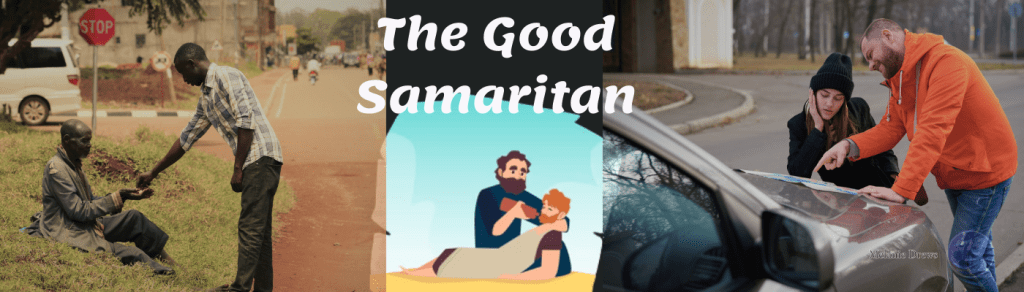
“‘Now which of these three would you say was a neighbor to the man who was attacked by bandits?’ Jesus asked (the lawyer). The man replied, “The one who showed him mercy.’ Then Jesus said, ‘Yes, now go and do the same.’” (Luke 10:35-36)
The ending of this story and parable says it all: the lawyer recognizes that not only is he called to be a neighbor to all, especially to anyone who is seemingly ‘less than’ him, but also to be a loving, servant neighbor to all.
When I recognized that I had dismissed or simply missed my neighbors in need because I was too busy, too distracted, or too uncomfortable, I was changed, just as the lawyer was in this parable.

It is easy to see the religious leaders in the Old Testament as hard-headed or missing the point, which they did, but it is important to realize when we are doing the same, missing the point. The more we are in God’s Word, in prayer, in community with other believers, and focused on God, the more we will act in God’s love as the Samaritan. That is my prayer for myself today and for you, my friend, to recognize when we are being the priest or the Levite in this parable and to turn the other way, cross the road, and help a fellow brother or sister, as the Samaritan taught us.
With faith,
Melanie Drews
Paws on God’s Path
 Paws on God's Path
Leave a comment